

Parts of a Spinning Rod
Generally speaking, fishing rods fall into two categories: spinning rods and casting rods. Although they look similar at first glance, there are some fundamental differences that set them apart from each other. To best communicate these differences we felt it is important to first touch on the main parts of a fishing rod.
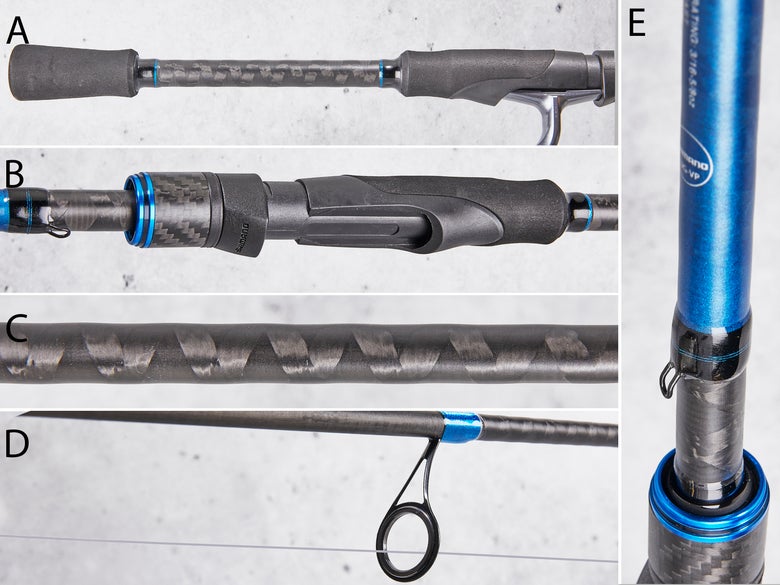
A. Handle
The connection point between the rod and angler, the handle provides balance, control, and sensitivity, making it one of the most critical components of a rod. Typically made from cork, EVA, or composite materials, most bass fishing rods are either: full grip (which describes one continuous piece of material) or split grip (meaning they have a break in the material to expose the rod blank). The rod handle “A.” pictured above is an example of a split grip.
B. Reel Seat
The reel seat secures the reel to the rod. For bass fishing rods, the base of the reel will nest into a groove on one end of the reel seat and be secured in-place by a nut on the other end.
C. Blank
The rod blank is the core of the rod. Whether it’s made from graphite, carbon fiber, fiberglass, or a blend of materials, the blank is a thin sheet of material that has been carefully rolled into the shape of a pole. This “blank” serves as the base for which all the other components are attached.
D. Guides
Guides do exactly what it sounds like, they guide your line from the reel to the tip of the rod. They start about two-thirds of the way up the rod with the largest guide first and become smaller and more frequent as they approach the tip of the rod.
E. Keeper
The keeper is a connection point for your lure when it is not in use. Usually attached to the bottom of your rod, keepers come in a couple different styles, but all do the same thing – keep lures from tangling.
Spinning Rods vs. Casting Rods
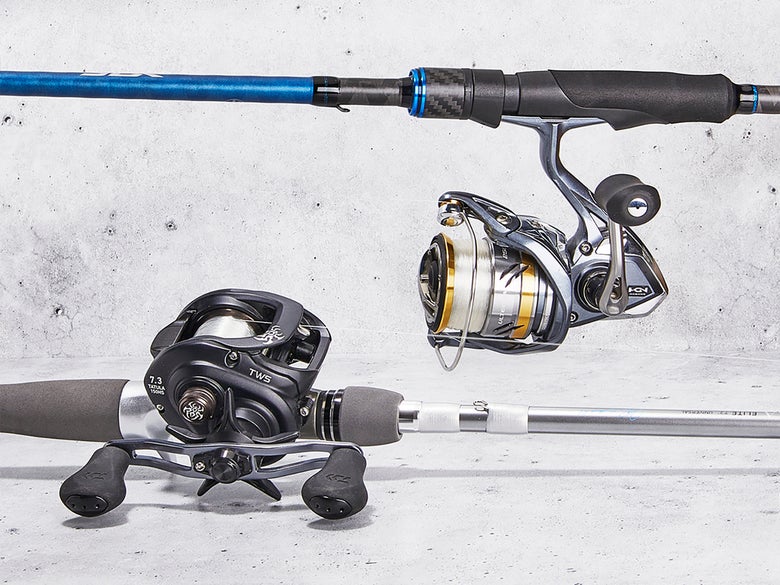
Now that we have a general understanding of a rod and its parts, let’s discuss the difference between a spinning rod and casting rod – the most notable of which is reel orientation. On a spinning rod, the reel is designed to sit below the fishing rod, while casting rods are designed so the reel sits atop of the rod.
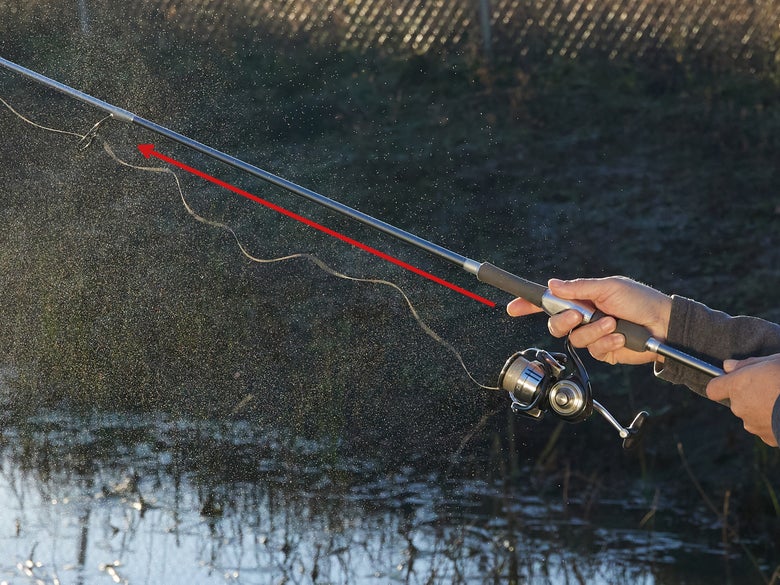
Spinning rods also require larger diameter guides that are set farther away from the rod blank to manage the fishing line as it exits the spinning reel in a helix-like shape.
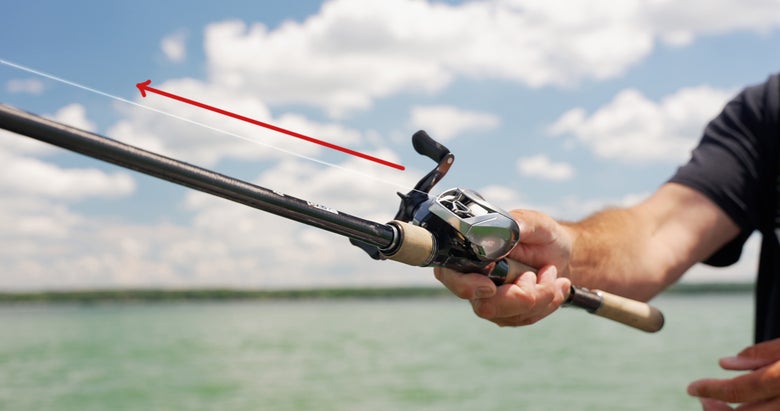
Casting rods often feature much smaller diameter guides that are set closer to the rod blank because the fishing line comes off a casting reel in a straight line of travel.
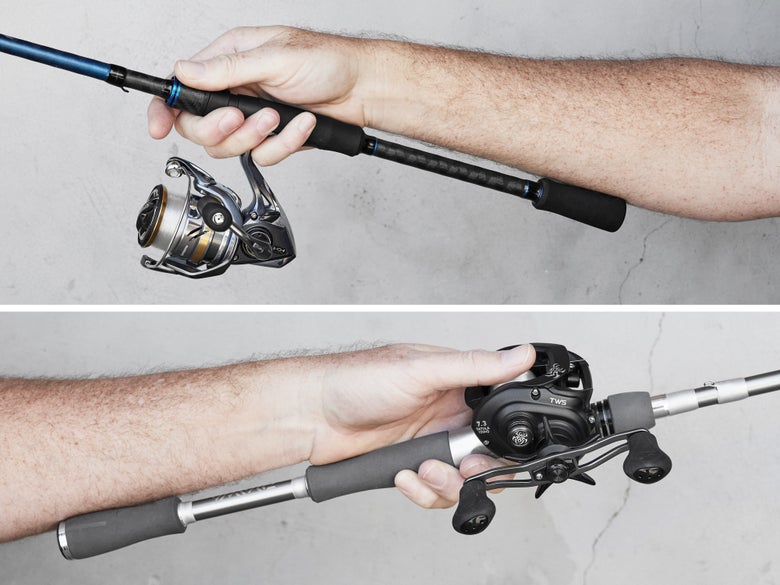
Additional differences worth noting are the reel seat and the handle configuration. Spinning rods are shaped so that your forearm rests along the back of the rod and fingers wrap around the base of the reel and reel seat. While casting rods are designed so that the angler can grab the reel and rod in the palm of the hand with the butt of the rod supported by the inside of the forearm.