

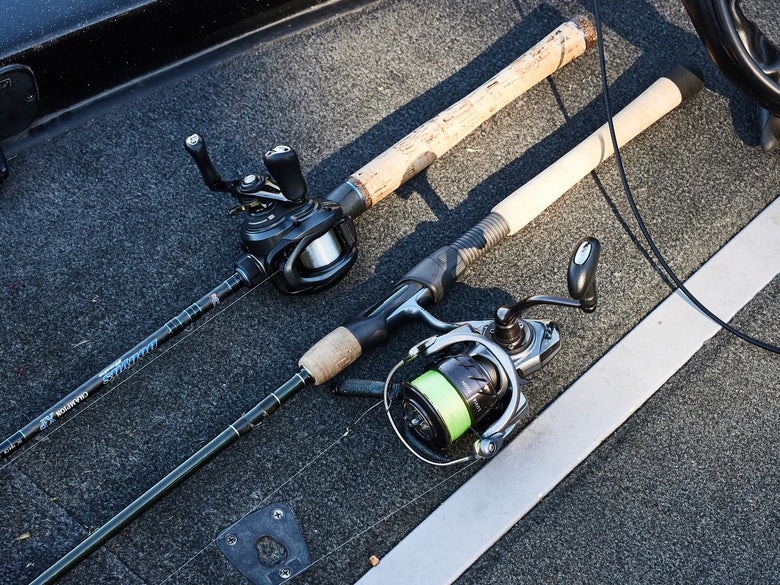
If you are just diving into the sport of bass fishing and looking to optimize your time on the water, it all starts with choosing the right fishing gear. One of the most critical components to fish-catching success starts with your reel. With tons of options to take into consideration, like the type of fishing you plan on doing, reel materials, reel size, and gear ratio, the seemingly simple question of “What should I choose for my first fishing reel?” can quickly turn into a dizzying subject.
For most people, spinning reels are widely regarded as the best starting point for anglers who are learning to bass fish. More specifically, beginners should look for a lightweight, 2500-size spinning reel, with a 5:1 – 6:1 gear ratio. Throughout this article, we shed light on the anatomy of a reel, explain the differences between spinning and casting reels, and ultimately offer our favorite choices for your first bass fishing reel.
Parts of the Spinning Reel
Although the main components of a casting and spinning reel are similar in functionality, there are a few fundamental differences that set them apart from each other. Bass fishing reels are often separated into two categories, ‘Spinning’ and ‘Casting’ reels, and to better understand the differences we’ll touch on the main parts of a spinning reel.
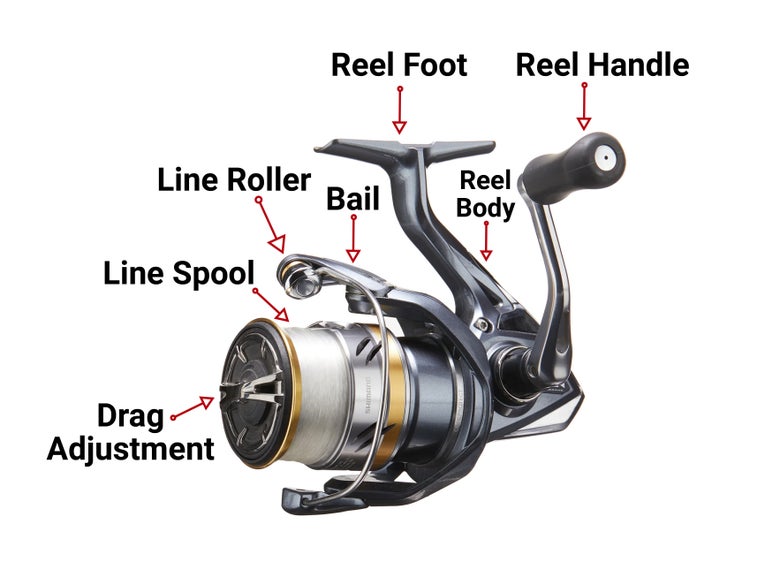
1. Reel Foot
The reel foot is the portion of the reel that’s used to attach the spinning reel to the reel seat of a spinning rod.
2. Reel Handle
Arguably the most important part of the spinning reel, the reel handle is the arm and paddle handle protruding from the reel body that turns in a circular motion to gain line on the spool after the bail is engaged. Heavier setups will typically have a larger knob or paddle handle, while finesse setups will have a smaller knob to give you more control over your presentation.
3. Reel Body
The reel body houses the gearbox and other internal components of a spinning reel. Typically built from aluminum, graphite, plastic, or other metal materials, it’s important to choose a reel body that can withstand the abuse of your fishing environment. Most high-quality spinning reels are made from lightweight aluminum for strength and rigidity, but if you are fishing in saltwater environments, you’ll want to confirm the reel body and gears have the proper corrosion-resistant coatings and seals to ensure longevity and performance.
4. Bail
The bail arm on a spinning reel is used to gain access to the line on the spool. When the bail arm is open, the line flows freely from the spool, so when it’s time to make a cast, anglers open the bail arm and pinch the line with a pointer finger. If the bail is engaged or closed, the line is held stationary by the line roller, and the bail arm oscillates during the retrieve to wind the line back onto the spool. The line can also be pulled off the spool when the bail is engaged when you’re hooked up to a fish.
5. Spool
The spool is used to hold the line on the spinning reel and plays an important role when it comes to line management and castability. Line capacity is determined by the size of the spool and is commonly used to differentiate the sizes of spinning reels.
6. Drag Adjustment
The drag adjustment knob is located on the top of the spool used to control the braking system inside the spinning reel. When you tighten the drag adjustment clockwise, you increase the amount of pressure that is required to release the line from the spool, when the bail is engaged. The inverse of that is true as well, if you turn the drag adjustment counter-clockwise, you lessen the drag pressure.
7. Line Roller
The line roller holds the line in place as the spool moves up and down during the retrieve and is also responsible for applying pressure to the spool to engage the drag system. The line roller also directs your line upwards through the guides.
Spinning Reels vs. Casting Reels
There are many noticeable differences between casting and spinning reels, but the main differentiator is the position of the spool, the direction of the line flow, and how they’re orientated when mounted to the rod. With spinning tackle, the reel hangs a few inches below the rod handle, while a casting reel sits atop your fishing rod flush with the reel seat.
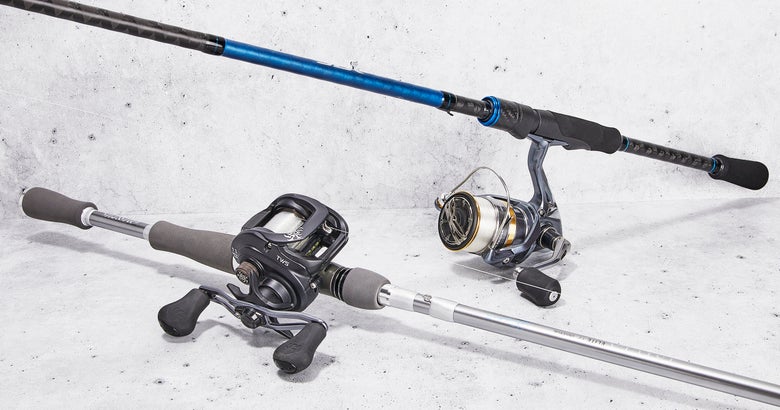
Spinning reels have a fixed spool and the line is managed as the spool moves up and down while the bail oscillates around the spool and guides on the line during the retrieve. On a casting reel, the spool rotates as you turn the reel handle, and the line guide layers it on the spool evenly without the need to turn the bail arm around the spool. Spools on a spinning reel face vertically so the line can come off the top through the guides, while spools on casting reels are positioned horizontally to the guides for line management.

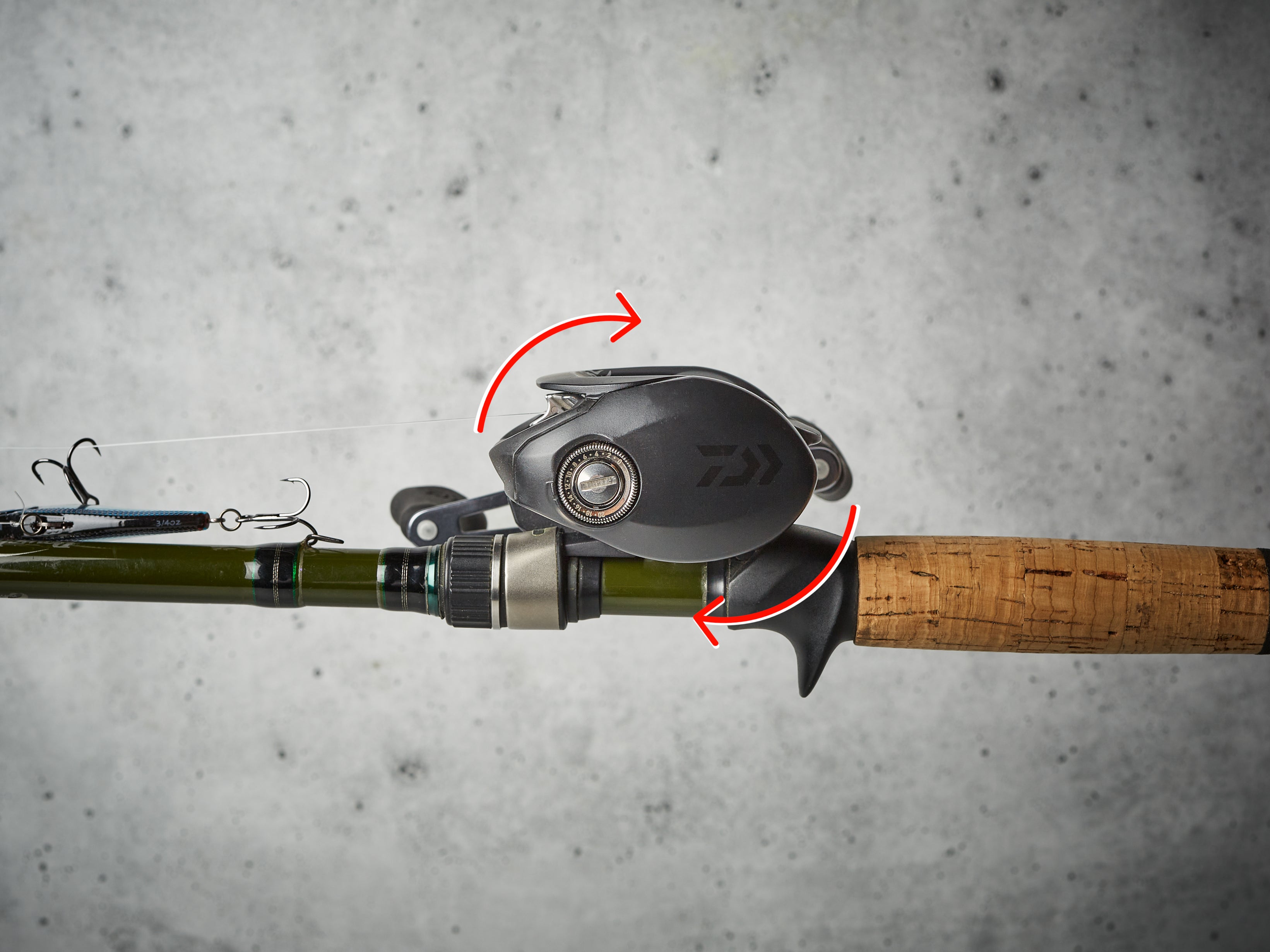
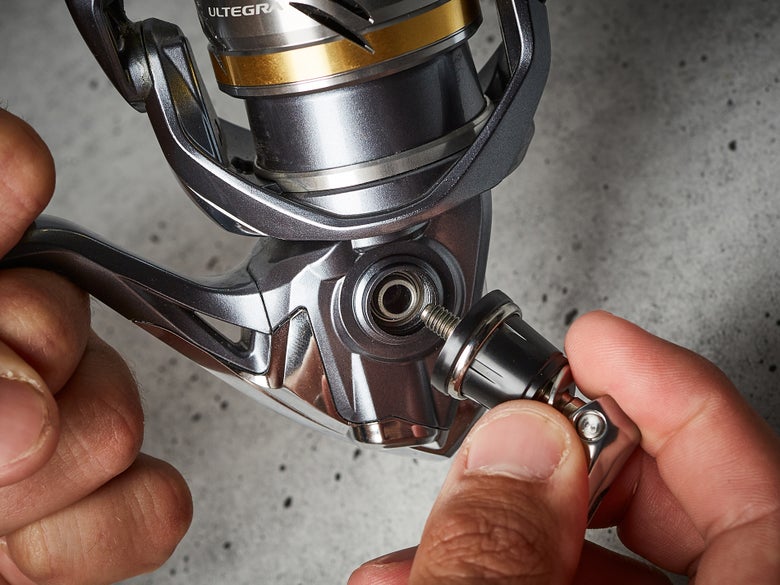
Important to note that the handle on a spinning reel can easily and quickly be swapped from left- or right-hand retrieve by swapping the handle over to the other side of the gearbox, but on a casting reel the handle remains in a fixed position.
Beginning Reel Recommendations
Now that we’re familiarized with the parts of a reel and the differences between spinning and casting reels let’s finally answer the question: “Which reel should I add to my cart?” Simply put – spinning reels with a mid-range 5:1 or 6:1 gear ratio and 2500-size spool offer the most versatility for a variety of entry-level fishing tactics. Below, we have highlighted some of our best introductory spinning rods that fit those requirements!
What reel should I use for bass fishing?
For an entry-level angler, learning how to cast a spinning reel is easier than a baitcasting reel, as spinning tackle requires far less training and is more intuitive to dial in and cast when you’re first getting started. Your hand should rest comfortably around the reel seat with the stem of the reel protruding through your fingers. To cast a spinning reel, hold the line with your index finger, open the bail, and reach back to make an overhand cast by releasing your finger and using the weight of your lure to load the rod tip. On a casting reel, the spool rotates freely within the reel so the angler must apply pressure to the spool using their thumb during the cast to prevent backlash.
What is a gear ratio? How do they differ?
The gear ratio refers to the number of times the spool turns for every rotation of the handle, or in the case of a spinning reel, the number of times the bail arm rotates around the fixed spool. Most spinning reels are offered in 5:1 to 6:1 gear ratio, although some manufacturers are starting to make reels with 7:1 gear ratios, and faster for anglers who are fishing deep and want to spend less time reeling up their line.